

From January to May 2026, China’s domestic automotive industry ran a 3.4% profit margin on sales.
That is a five-year low for the period. Total profit came to RMB 144 billion — spread across every vehicle sold, it is far thinner than most people assume. Over the same stretch, China exported 7.153 million vehicles between January and August, up 66.7% year on year, already more than the whole of 2025.
Margins at home are as thin as they can get, while exports keep running. Put the two together and almost everything happening across the supply chain this year starts to make sense: the money in car sales is changing location.
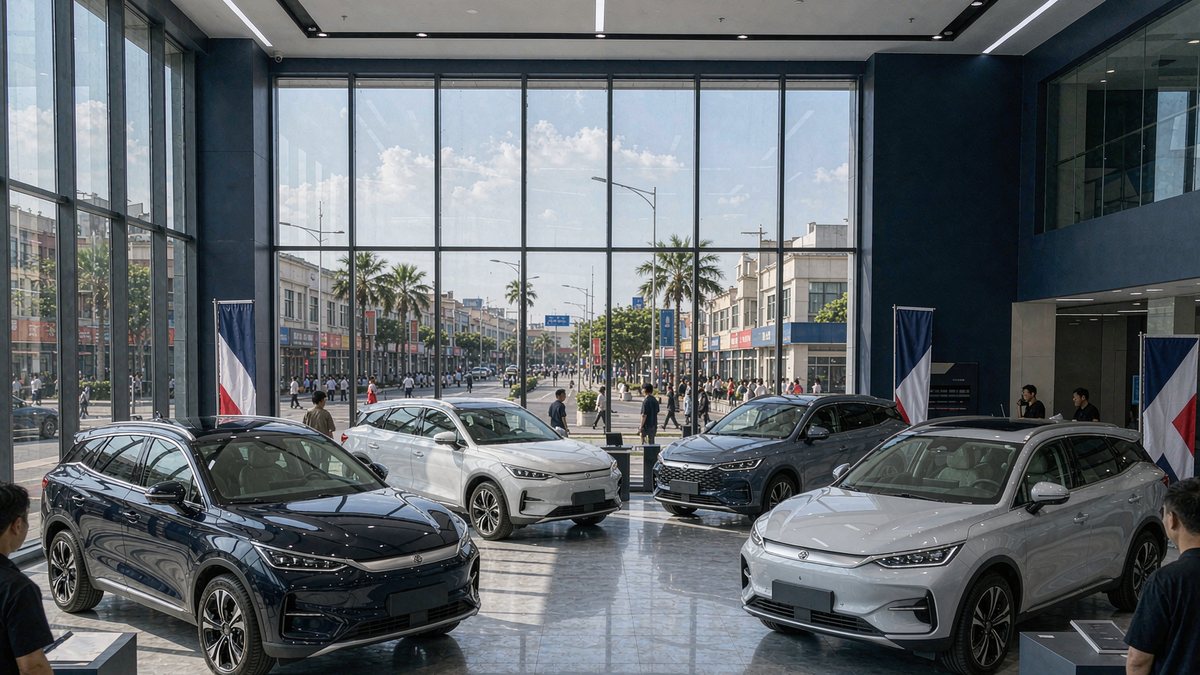
A Chinese brand showroom overseas (AI-generated image)
01 3.4% vs 28.4% — one car, two profit worlds
Start at home. China’s domestic auto industry posted a 3.4% profit margin on sales in the first five months of 2026, with total profit of RMB 144 billion. More than 130 brands compete in one market, and the price war has pushed margins down to the floor.
Now look overseas. Brokerage estimates put BYD’s overseas automotive gross margin at about 28.4% in the first half, against roughly 17.0% at home — a gap of 11.4 percentage points. Chery’s overseas average selling price is RMB 121,600 per vehicle, 13.7% above its domestic level, with per-vehicle profit above RMB 10,000; some analysis suggests overseas operations carry over 90% of Chery’s core profit. Broader estimates put the profitability of Chinese carmakers’ export business more than 40% above their domestic business.
The same car earns a different order of money depending on where it is sold. That gap — not sentiment — is the engine behind the export run.
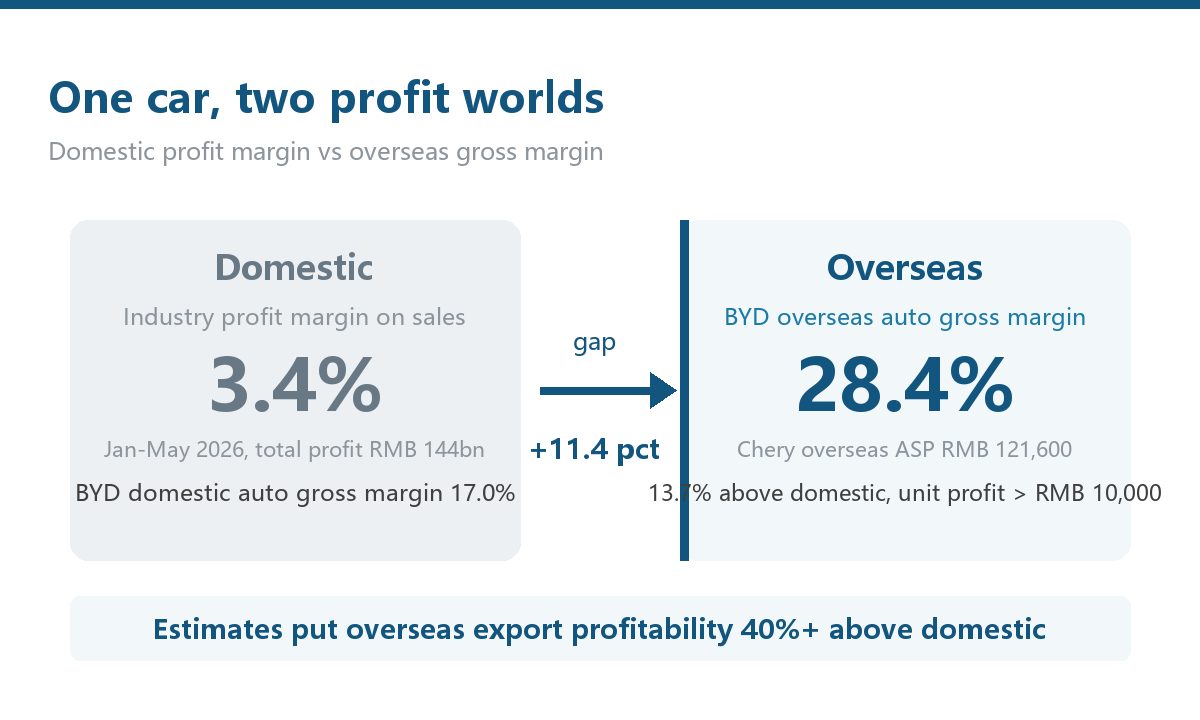
Domestic profit margin on sales versus overseas gross margin (see notes in figure).
Rising volume is the visible story. Money changing location is the real one.
02 Who now lives on overseas sales
To tell whether a carmaker is genuinely betting on overseas markets, ignore how many “global editions” it has launched and look at one number: overseas sales as a share of its own total sales.
Chery exported 943,800 vehicles in the first half — 69.5% of everything it sold, up from roughly 50% for full-year 2025. Nearly seven of every ten cars it sells now go abroad. Great Wall sold 291,400 units overseas in the first half, 49.9% of its total. BYD reached 1.158 million overseas units in January–August, 43.4% of its sales, with overseas revenue of RMB 181.27 billion in the first half — 52.6% of total revenue, past the halfway mark. SAIC recorded 734,700 units from exports and overseas bases, 35.9%; Changan delivered 402,000 units overseas, 33.6%.
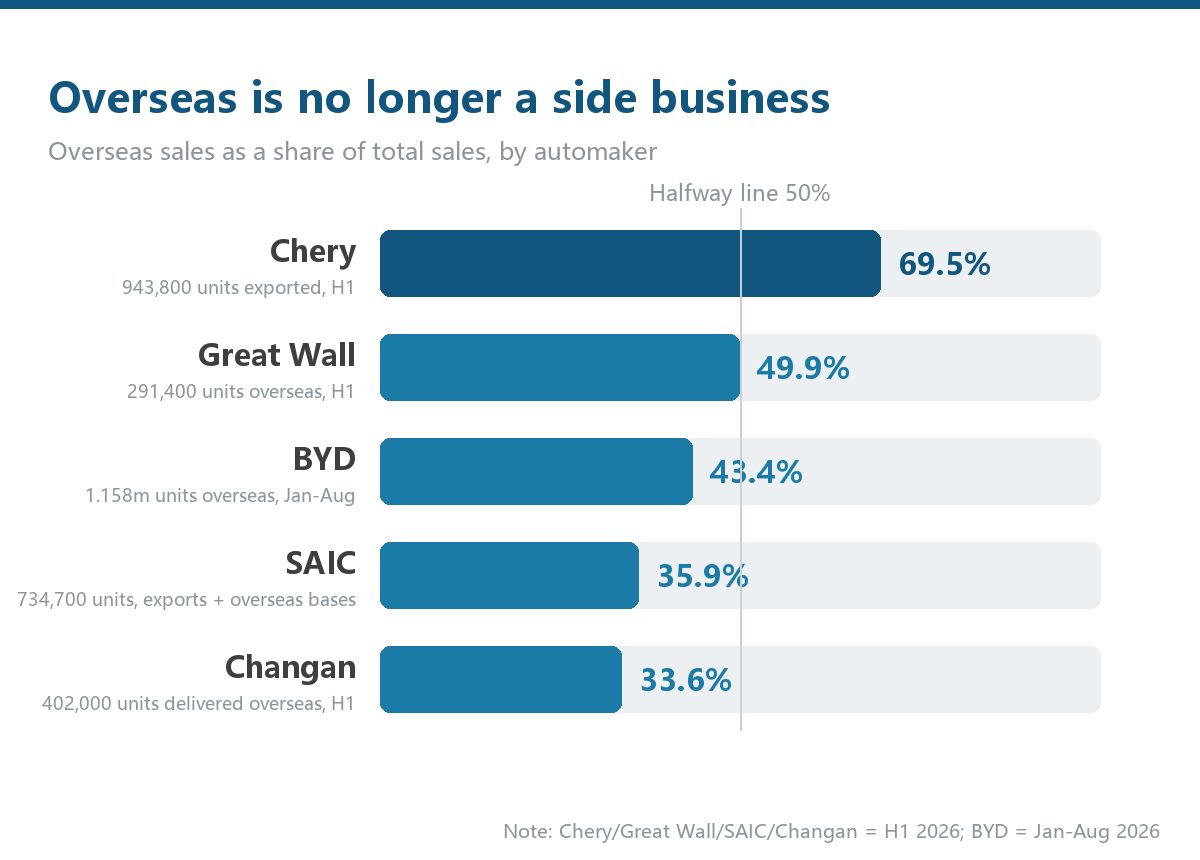
Overseas share of total sales by automaker (reporting periods in figure notes).
The August export ranking tells the same story. Chery led with 193,000 units, a 21.8% share; BYD followed with 184,000 units and 20.7%; Geely was third with 109,000. The gap between the top two is 9,000 units — the contest for the top of the export table is now a photo finish.
When overseas markets account for close to 70% of a carmaker’s volume, its overseas supply chain and aftersales network stop being “nice to have” and become a matter of survival. What that means for suppliers is not hard to work out.
03 Profits migrate, so should supplier revenue
The profit gap travels down the chain, and the direction is clear.
The upside: every extra yuan a carmaker earns abroad has to be delivered by local execution — parts forwarding and regional distribution, local homologation and compliance, cross-border finance and settlement, aftersales and technician training. These are the services that protect the overseas margin, and carmakers will pay for them.
The downside: with domestic margins at 3.4%, OEMs will keep pressing domestic suppliers on price. For suppliers that stay at home, the price war only gets harder. Squeezed from both sides, the choice is not complicated.
In one line: follow the price war at home and margins keep thinning; follow overseas fulfilment and there is still a premium to earn.
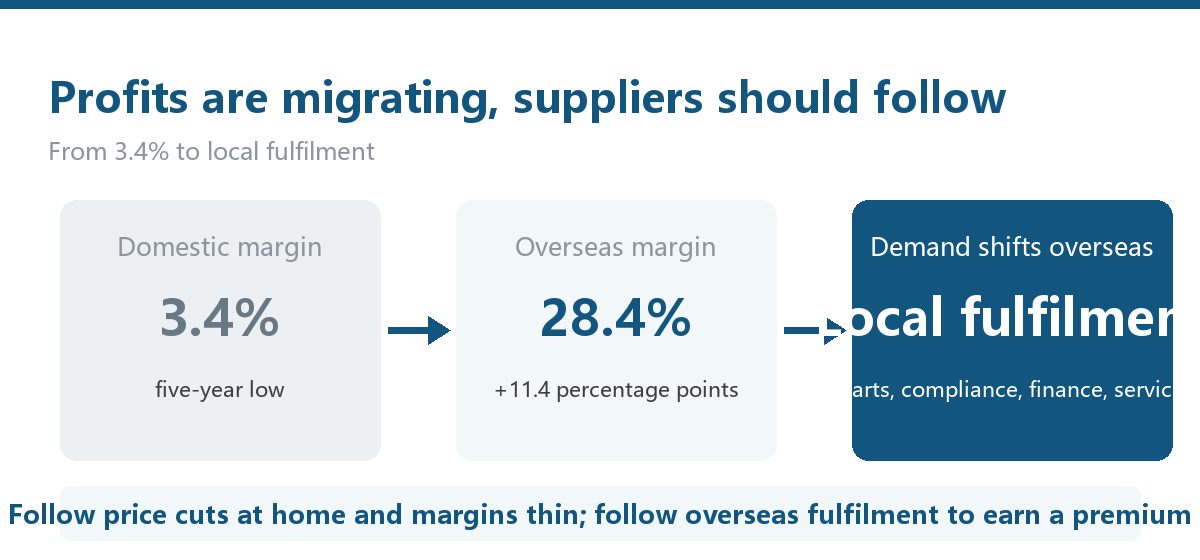
Profit migrates, and supplier demand moves with it.
04 Three things to watch
Watch the share, not the volume. To judge whether a customer is worth deepening with, look at its overseas share of unit sales and of revenue. Companies above 50% treat overseas as the main business, which means recurring demand for suppliers. Those still low on the list are mostly opportunistic orders.
Watch the margin, not the units. The priority abroad is defending those 11 percentage points. Services that cut local cost, shorten delivery cycles, or reduce compliance risk carry the strongest pricing power. Competing on price alone is the same race overseas as it is at home.
Watch the fringe players restarting abroad. Zotye has moved its A0-class electric model, the Wink Y01 international version, into pilot production aimed at overseas markets; Neta’s restructuring plan is also centred on overseas sales. New players bring small batches and urgent deliveries — real opportunities, but with higher payment and homologation risk. Take them, but start with small orders.
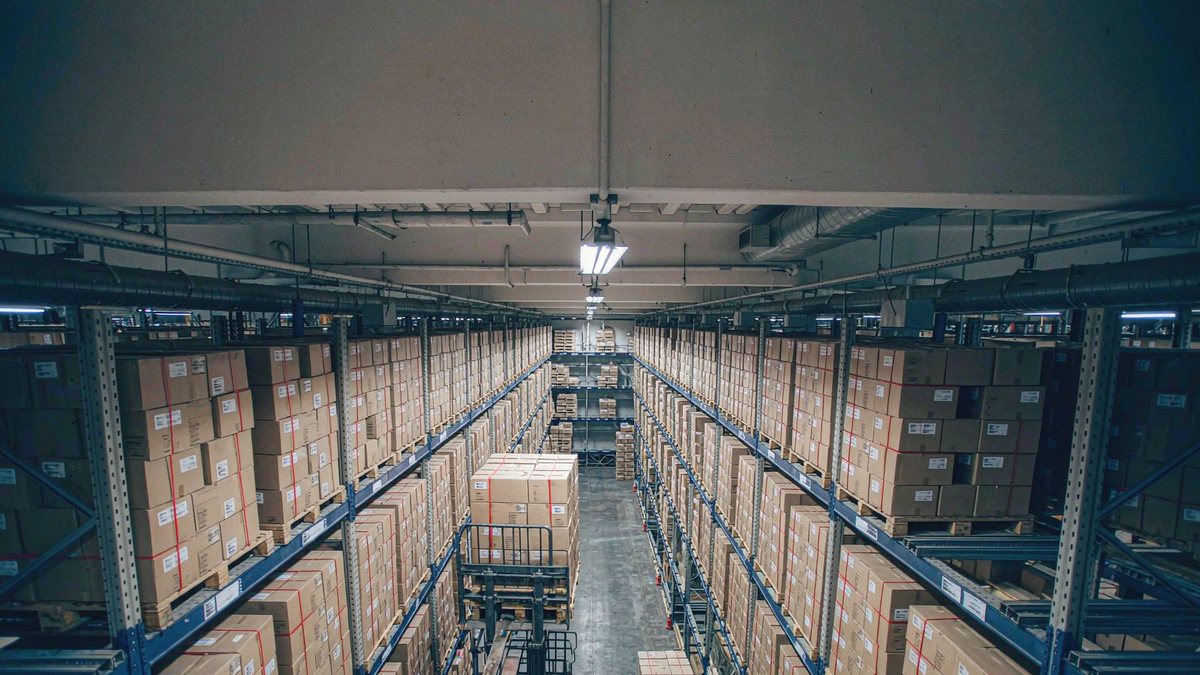
An overseas parts warehouse, where fulfilment starts (AI-generated image)
Closing
3.4% is not bad news. It is a signpost.
It tells the whole chain where the money is, and therefore where the work should go. Export volumes will keep growing. What deserves your attention is the part of the profit that only exists overseas — and the service demand that grows up around securing it.
About MUYAN
MUYAN tracks China’s automotive go-global industry — exporters, component suppliers, logistics providers and compliance teams — and turns industry data into decisions you can act on.
Data notes: CAAM = China Association of Automobile Manufacturers (complete vehicle export basis). Gross margin comparisons are brokerage estimates and may differ from company filings.
Sources: China Association of Automobile Manufacturers (CAAM); China Passenger Car Association; public disclosures of BYD, Chery, Great Wall, SAIC and Changan; brokerage research estimates; press reports dated 14–16 September 2026. Figures cited on different reporting periods are labelled as such in the text.